-
Institute of Urban Environment Achieved New Progress in Understanding the Impact of Reservoir Cyanobacterial Bloom on Community Dynamics of Free-living and Particle-attached Bacteria
Contacts:YANG Jun
E-mail:jyang@iue.ac.cn
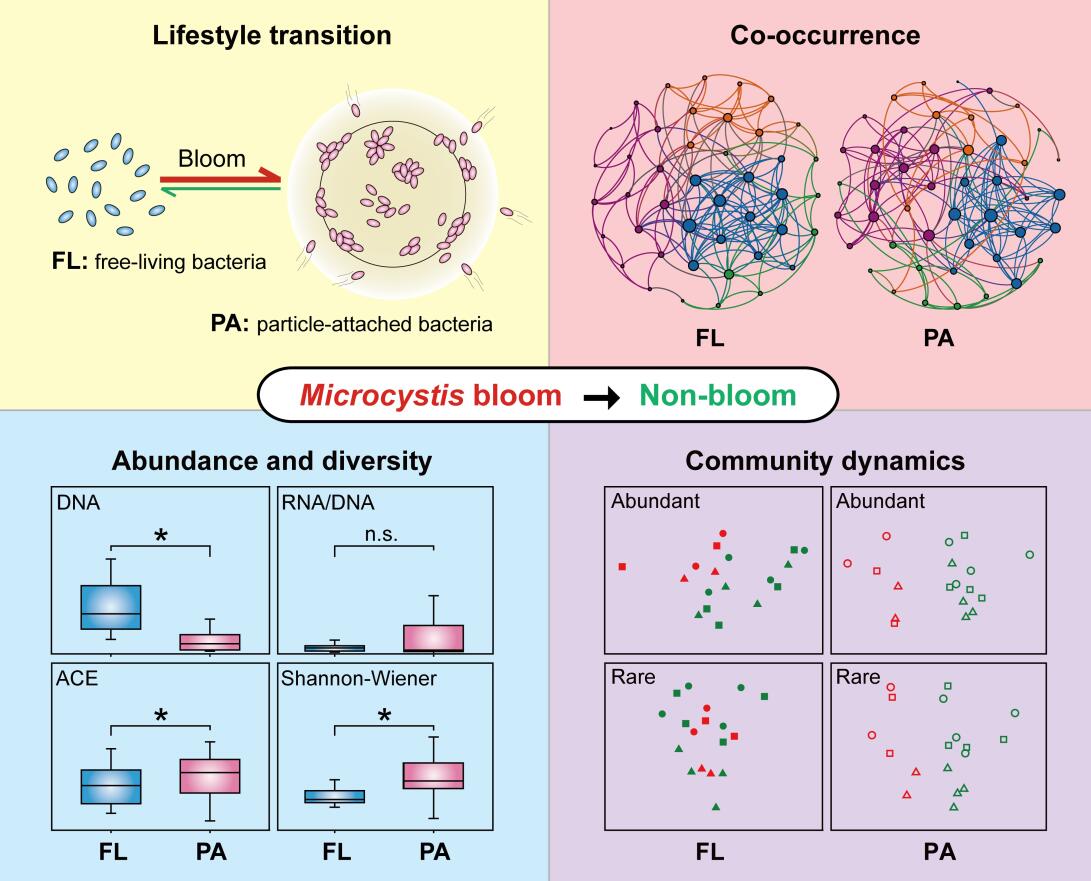
link:https://doi.org/10.1016/j.scitotenv.2018.12.414Cyanobacterial blooms occur in aquatic ecosystem around the world and have adverse effects on water quality, recreation and food web dynamics. A cascade of changes in planktonic microbial communities have been observed during cyanobacterial blooms. Monitoring the dynamics of cyanobacterial and bacterial populations, and investigating their interaction and driving factors wil...
-
Facile On-Site Aqueous Pollutant Monitoring Using a Flexible, Ultralight, and Robust Surface-Enhanced Raman Spectroscopy Substrate
Contacts:ZHONG LuBin
E-mail:lbzhong@iue.ac.cn
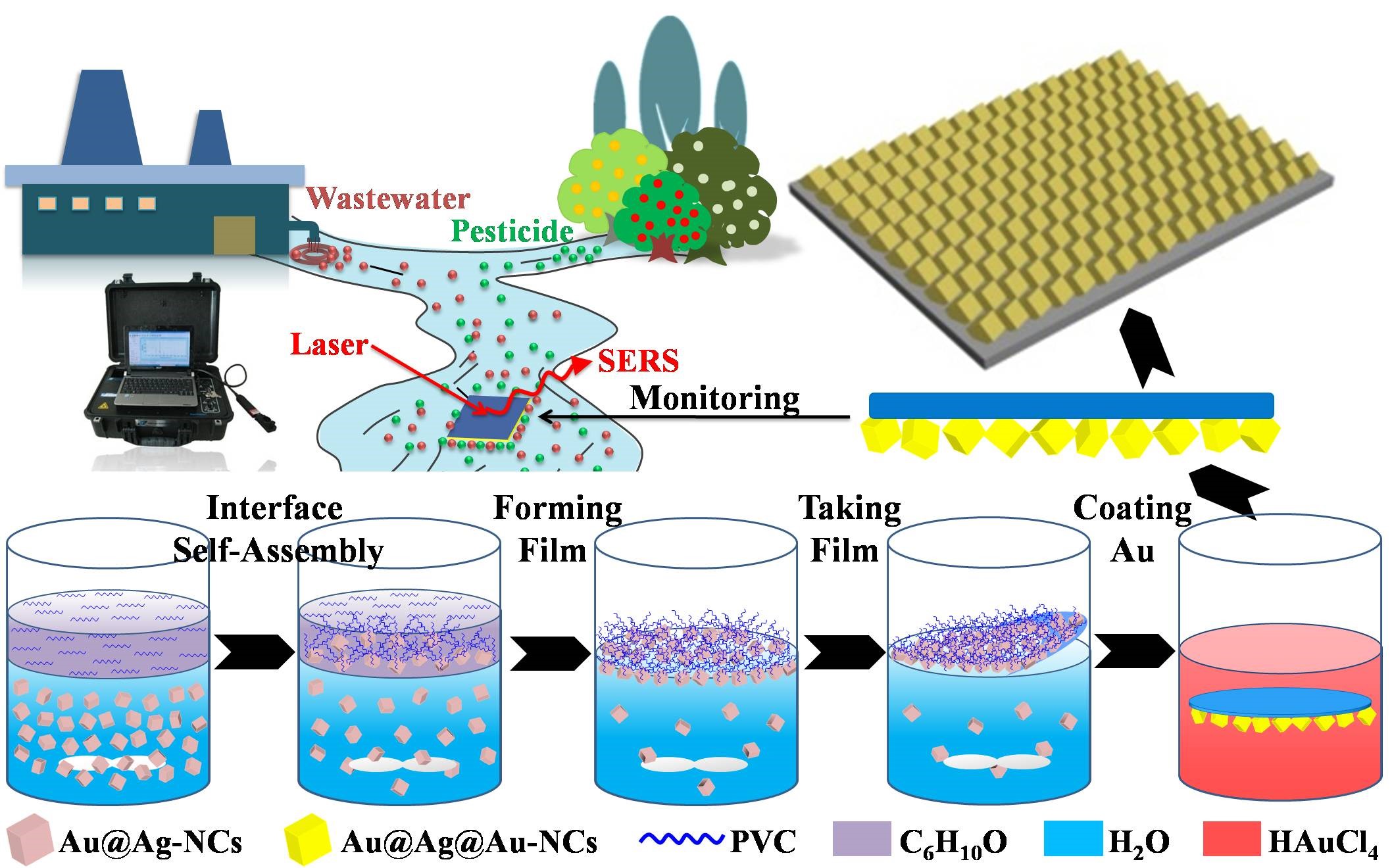
link:https://pubs.acs.org/doi/abs/10.1021/acs.est.7b04327Nowadays, environmental pollution has threatened human health and ecosystems in many aspects. In particular, aquatic ecosystems and human health have been seriously threatened by illegal discharge of wastewater. To prevent such water pollution, rapid on-site pollutant detection program has to be established. However, currently, simple and effective monitoring methods are sti...
-
Institute of Urban Environment has made new progress in understanding the occurrence and fate of BPA methylation products in the aquatic environment
Contacts:YU Chang-Ping
E-mail:cpyu@iue.ac.cn
link:https://www.sciencedirect.com/science/article/pii/S030438941830462XBisphenol A (BPA), chemically designated as 2,2-bis(4-hydroxyphenyl) propane, is a very common synthetic organic compound, used as intermediate in variety of consumer products like polycarbonate plastics and epoxy resins. It is one of the highest production chemicals in the world manufactured in bulk. Because of its well-known endocrine disrupting activity, BPA has been cons...
-
Institute of Urban Environment Reveals Large-scale Biogeographical Patterns of Bacterial Antibiotic Resistome in the Waterbodies of China
Contacts:Jun Yang
E-mail:jyang@iue.ac.cn
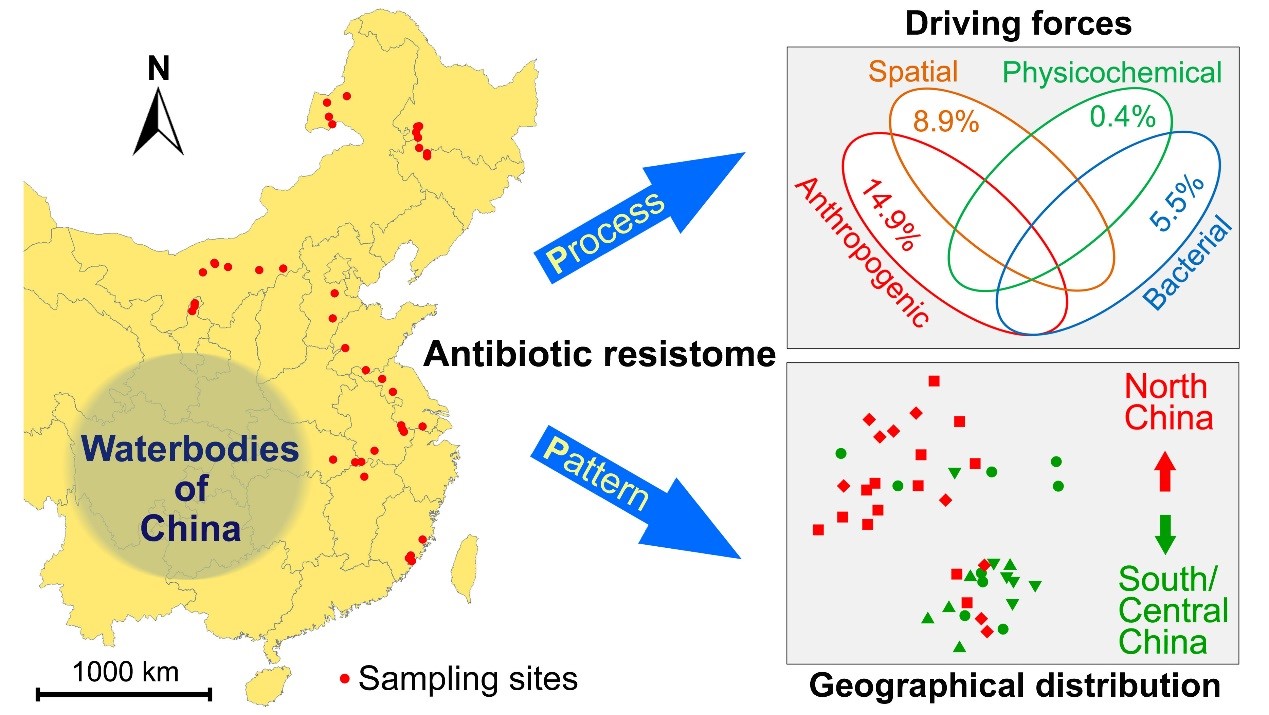
link:https://www.sciencedirect.com/science/article/pii/S0160412017319906Antibiotics have been widely used to treat bacterial infections since the 1940s and have revolutionized global medicine. However, the abuse of antibiotics has triggered the antibiotic resistance problem. The antibiotic resistances of bacteria are conferred by antibiotic resistance genes (ARGs) which can spread among different bacteria. The widespread occurrence of microbial ...
-
‘Superbug gene’ found in one of the most remote places on earth
Contacts:SU Jianqian
E-mail:jqsu@iue.ac.cn
https://doi.org/10.1016/j.envint.2019.01.034Antibiotic-Resistant Genes (ARGs) that were first detected in urban India have been found 8,000 miles away in one of the last ‘pristine’ places on earth, a new study has shown.Soil samples taken in the Kongsfjorden region of Svalbard have now confirmed the spread of blaNDM-1 into the High Arctic – an ARG originally found in Indian clinical settings, which confer multidrug...
-
Study finds antibiotic resistance genes in High Arctic region
Contacts:SU Jianqian
E-mail:jqsu@iue.ac.cn
https://doi.org/10.1016/j.envint.2019.01.034Researchers who took soil samples in 2013 from the Kongsfjorden region of Svalbard - a Norwegian archipelago in the Arctic Ocean - found "comparatively localised" levels of blaNDM-1, which poses no health threat.It also says that the detection of blaNDM-1 is “noteworthy” since the study uses samples collected less than three years after the first detection of the superbug ...