-
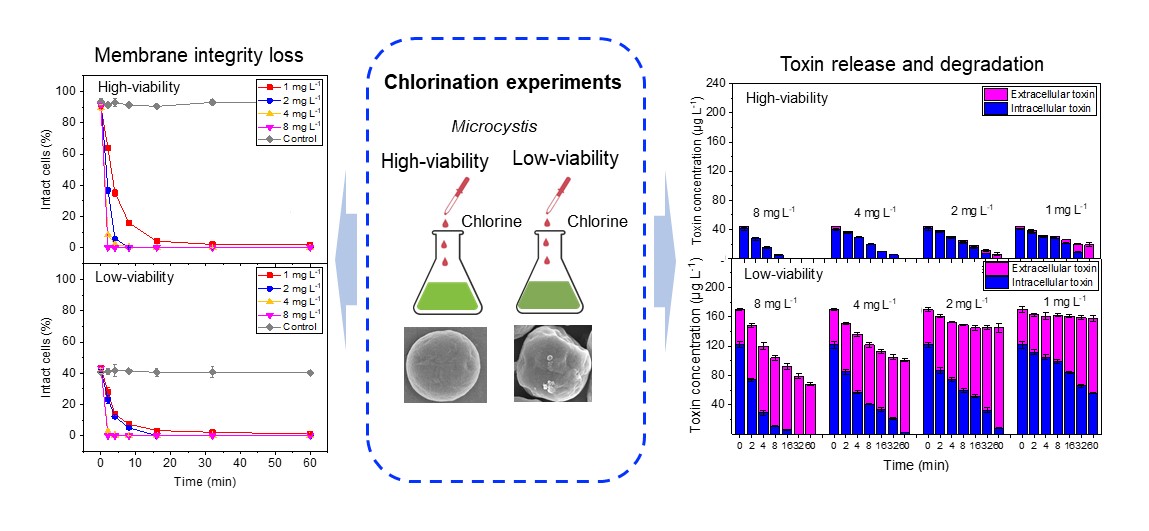
Study highlights the differences of chlorination to treat high- and low-viability cyanobacteria
Contacts:YU Xin
E-mail:xyu@iue.ac.cn
https://dx.doi.org/10.1016/j.watres.2020.115769Lakes and reservoirs are important sources of drinking water, but high frequency of toxic cyanobacteria bloom and associated cyanotoxin could impair drinking water quality. In recent years, majority studies have investigated the effects of chlorination on membrane integrity and toxin fate of high-viability cyanobacteria. Actually, cyanobacteria bloom is a successive process ...
-
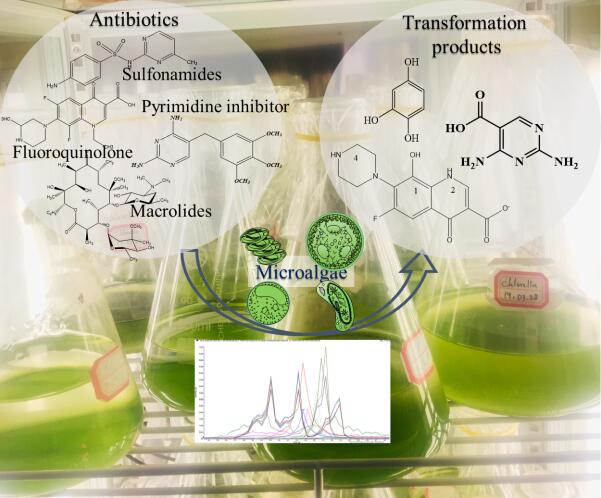
Green bioremediation: microalgae for antibiotic removal from wastewater
Contacts:SUN Qian
E-mail:qsun@iue.ac.cn
Article : https://www.sciencedirect.com/science/article/pii/S0304389419319399Rapid urbanization and industrialization have severely implicated the environmental and human health in various ways including freshwater contamination by wastewater effluents. Over the years, several technological interventions have been made to upscale the capabilities of the wastewater treatment systems (WWTS) to cope up with the evolving wastewater contaminant chemistry ...
-
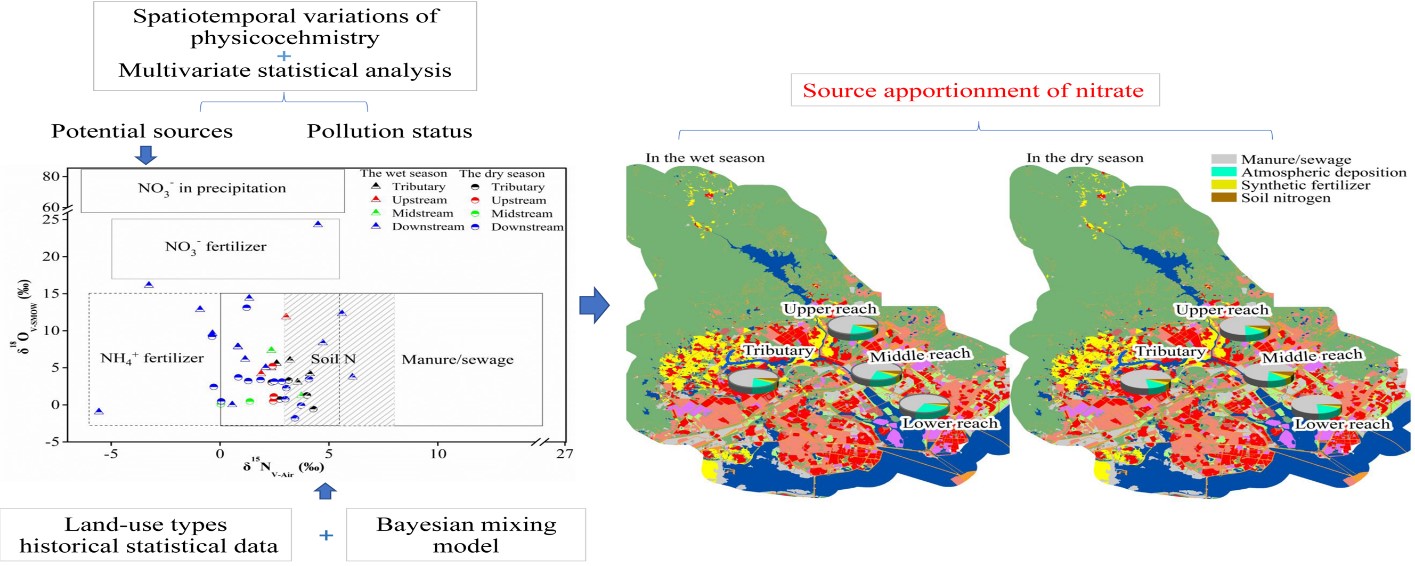
The institute of Urban Environment has made progress in nitrate tracing in a coastal peri-urban watershed
Contacts:YAN Changzhou'
E-mail:czyan@iue.ac.cn
link 1:https://doi.org/10.1016/j.chemosphere.2019.125364Nitrate (NO3-) pollution in water-body is mainly caused by intensive human activities and land use conversion, which has become a common environmental problem in peri-urban areas. Elevated NO3- concentrations in water bodies, especially in coastal and marine environments, cause eutrophication, harmful algal blooms, and hypoxia, ultimately resulting in a series of harmful kno...
-
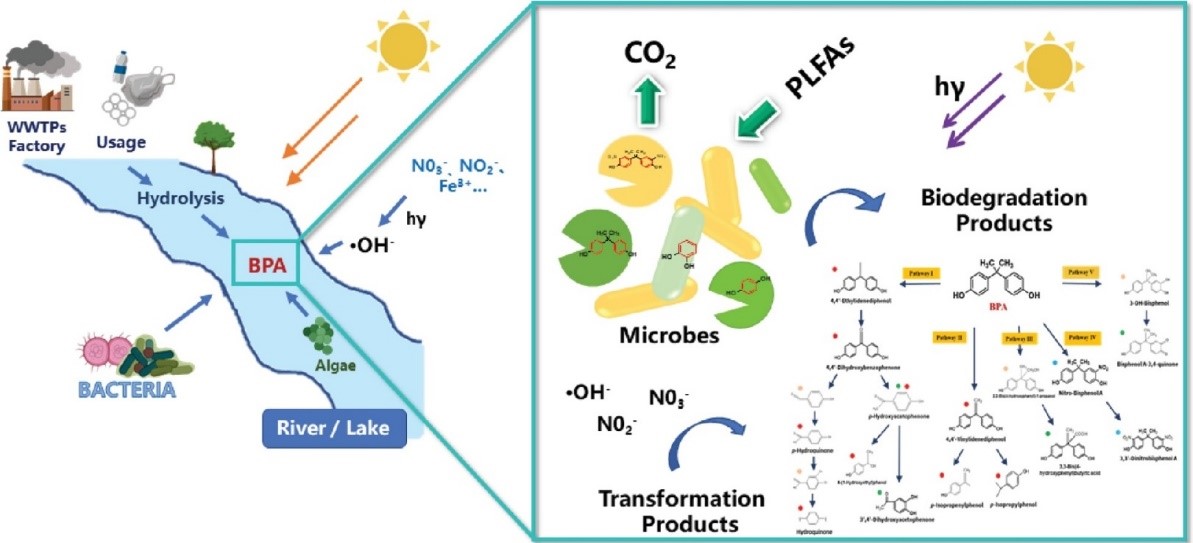
Scientists reveal the role of ecological factors in surface water on bisphenol A attenuation in a microcosm study
Contacts:SUN Qian
E-mail:qsun@iue.ac.cn
link:https://doi.org/10.1016/j.jhazmat.2019.121584Bisphenol A (BPA) is an environmental concern for its endocrine disrupting abilities. It has been used extensively, in the manufacturing of epoxy resins and polycarbonate plastics, since 1960s. Residues of BPA are ubiquitously detected in both aquatic and terrestrial environments throughout the world. Several studied have reported the occurrence as well as degradation BPA in...
-
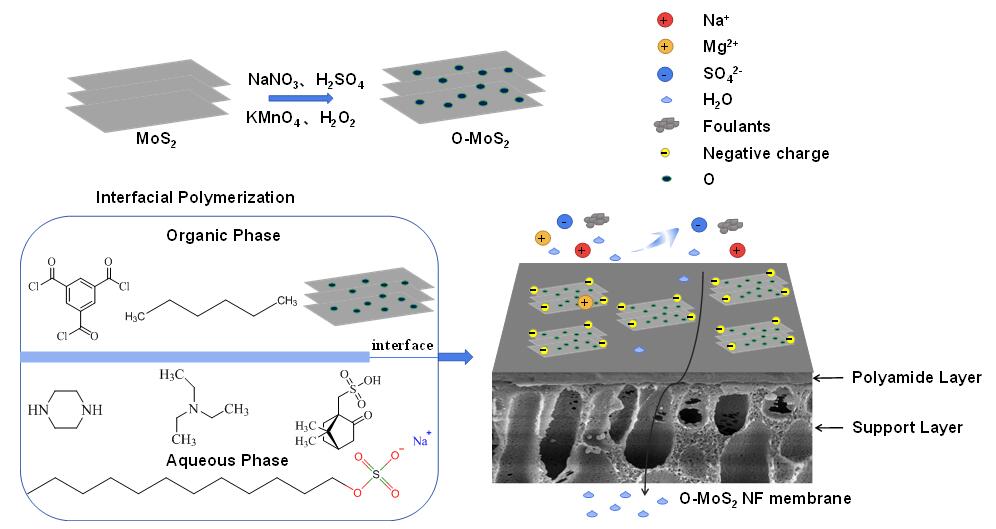
2D MoS2 and O-MoS2 TFN nanofiltration membranes for future desalination
Contacts:ZHANG Kaisong
E-mail:kszhang@iue.ac.cn
link 1:https://doi.org/10.1016/j.memsci.2020.118052
link 2:https://doi.org/10.1016/j.memsci.2019.117526Nanofiltration (NF) membrane has been recognized because of its advantages of low operating pressure and inexpensive equipment maintenance cost. However, the conventional thin film composite (TFC) membrane is limited by the “trade-off” phenomenon in the permselectivity, as well as the inevitable membrane fouling problem which causes significant reduction in flux. To decrea...
-
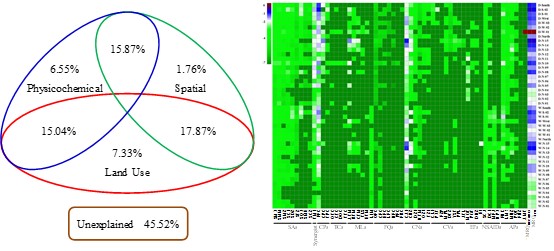
New progress in the spectrum and environmental risks of residual pharmaceuticals in stream water by the Institute of Urban Environment
Contacts:YU Shen
E-mail:syu@iue.ac.cn
link 1:https://doi.org/10.1016/j.jhazmat.2019.121594Pharmaceuticals vastly consumed by modern human for health and food might track anthropogenic impacts on aquatic ecosystem via their wide residual spectrum.In view of this, the study by Prof. YU Shen’s group investigated the spectrum of pharmaceutical residuals in stream water at confluence point of each subwatershed with various land use pattern in Jiulong River watershed,...