


• Home
  • About Us
    • Brief Introduction
    • Address from the Director
    • Directors
    • Organization
    • IUE in Media
  • Scientists
    • Academicians
    • Professors
    • Associate Professors
  • Research
    • Research Divisions
    • Research Progress
  • Education
    • Admission
    • Study at IUE
    • Scholarships
  • INT'L Cooperation
    • INT'L Cooperation News
    • Partnership
  • Papers
  • Join Us
    • Job Opportunities
    • PIFI
      • What's PIFI
Contact Us   |   Sitemap   |   CAS   |   中文
  • Home
  • About Us
    • Brief Introduction
    • Address from the Director
    • Directors
    • Organization
    • IUE in Media
  • Scientists
    • Academicians
    • Professors
    • Associate Professors
  • Research
    • Research Divisions
    • Research Progress
  • Education
    • Admission
    • Study at IUE
    • Scholarships
  • INT'L Cooperation
    • INT'L Cooperation News
    • Partnership
  • Papers
  • Join Us
    • Job Opportunities
    • PIFI

Research

  • HomeResearch Research Progress
  • Research Progress

    The Institute of Urban Environment, CAS, got new insights regarding the distribution of antibiotic resistance in plant phyllosphere microbiome

    Date:Apr 15, 2019

    Phyllosphere contains various microorganisms that may harbor diverse antibiotic resistant bacteria (ARB) and antibiotic resistance genes (ARGs). These ARB and ARGs would directly affect the health of human beings through food uptake. In a recent study published in Science of the Total Environment, a research group led by Prof. Yong-Guan Zhu from Institute of Urban Environment, Chinese Academy of Sciences reported a new observation on antibiotic resistome in phyllosphere of maize.

    Researchers found long-term application of sewage sludge and chicken manure significantly increased the abundance of ARGs. 62 unique ARGs were significantly enriched in the phyllosphere with long-term organic fertilization.

    Long-term organic fertilization altered the phyllosphere bacterial community composition, with a remarkable decrease in bacterial alpha-diversity. The profile of ARGs was strongly correlated with bacterial community compositions.

    The results underlined the necessaries of farm management for organic fertilization, mitigating antibiotic resistance dissemination and benefiting human health.

    The study entitled " Long-term organic fertilization increased antibiotic resistome in phyllosphere of maize" was published in Science of the Total Environment.
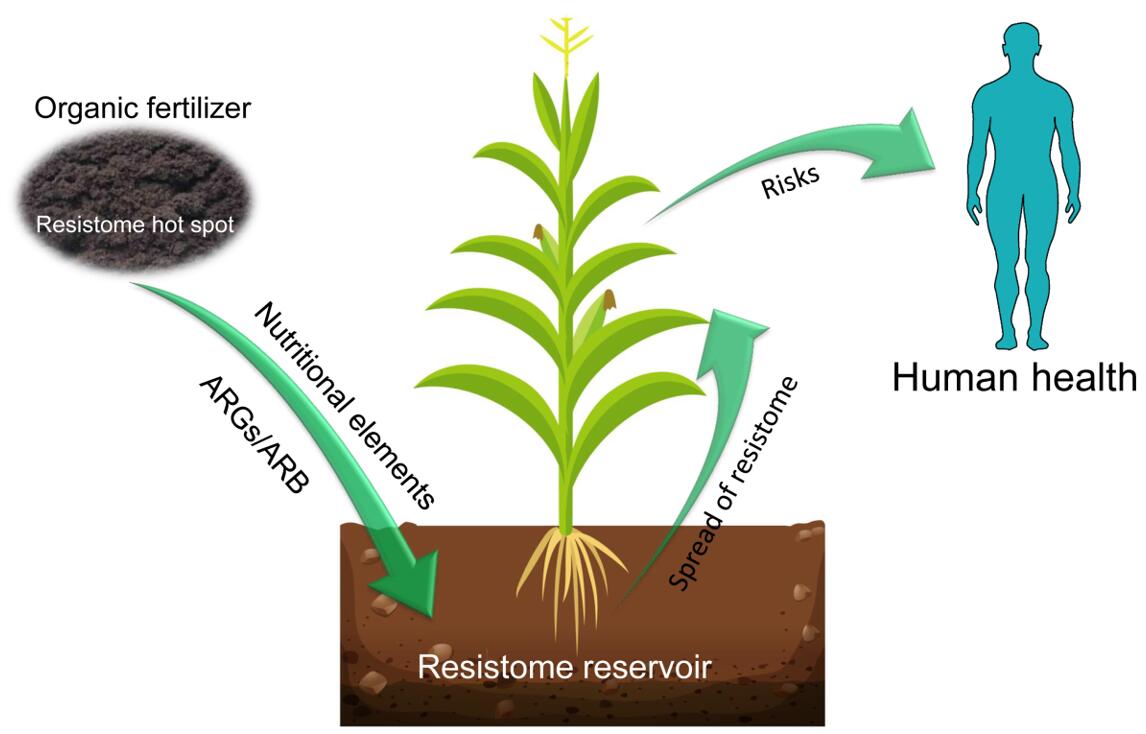
    Plant phyllosphere microbiome is the interface between human microbiome and natural microbiome. Organic fertilizer is a hotspot of antibiotic resistance genes, which might pose threaten to public health through food chain.


    Attachment Download:

    Contact

    E-mail:

    Related Articles

    About Us

    • Brief Introduction
    • Address from the Director
    • Directors
    • Organization
    • IUE in Media

    Scientists

    • Academicians
    • Professors
    • Associate Professors

    Research

    • Research Divisions
    • Research Progress

    Education

    • Admission
    • Study at IUE
    • Scholarships

    INT'L Cooperation

    • INT'L Cooperation News
    • Partnership

    Papers

    Join Us

    • Job Opportunities
    • PIFI
    Copyright © Institute of Urban Environment,Chinese Academy of Sciences. All Rights Reserved.
    1799 Jimei Road, Xiamen 361021 China.+86-592-6190973.