


• Home
  • About Us
    • Brief Introduction
    • Address from the Director
    • Directors
    • Organization
    • IUE in Media
  • Scientists
    • Academicians
    • Professors
    • Associate Professors
  • Research
    • Research Divisions
    • Research Progress
  • Education
    • Admission
    • Study at IUE
    • Scholarships
  • INT'L Cooperation
    • INT'L Cooperation News
    • Partnership
  • Papers
  • Join Us
    • Job Opportunities
    • PIFI
      • What's PIFI
Contact Us   |   Sitemap   |   CAS   |   中文
  • Home
  • About Us
    • Brief Introduction
    • Address from the Director
    • Directors
    • Organization
    • IUE in Media
  • Scientists
    • Academicians
    • Professors
    • Associate Professors
  • Research
    • Research Divisions
    • Research Progress
  • Education
    • Admission
    • Study at IUE
    • Scholarships
  • INT'L Cooperation
    • INT'L Cooperation News
    • Partnership
  • Papers
  • Join Us
    • Job Opportunities
    • PIFI

Papers

  • HomePapers
  • Papers
    A statistical framework to track temporal dependence of chlorophyll–nutrient relationships with implications for lake eutrophication management
    LINQIU Qianling; LIANG Zhongyao; XU Yaoyang*;Shin-ichiro S.Matsuzaki;KazuhiroKomatsu;TylerWagner

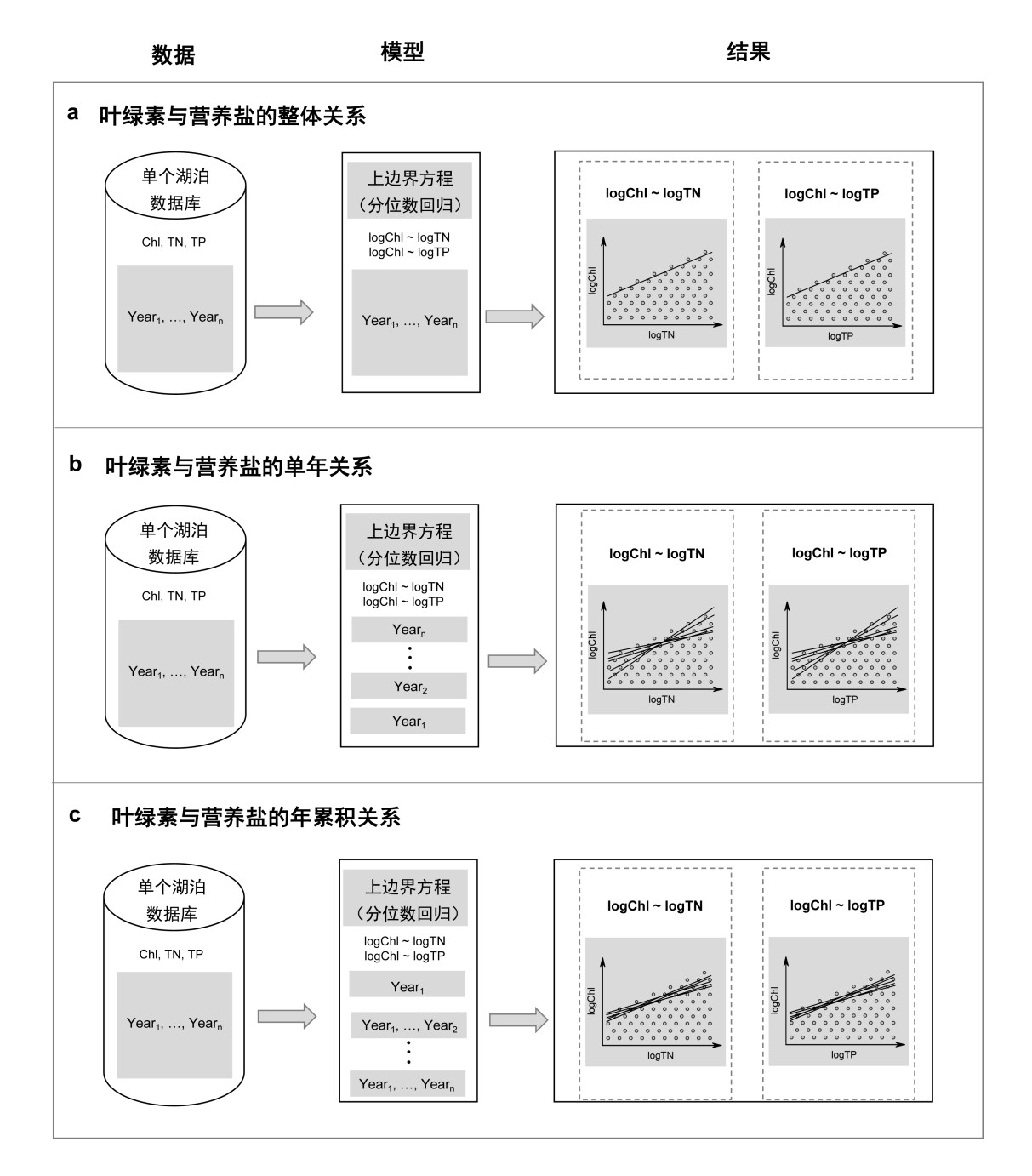
    A reliable chlorophyll–nutrient relationship (CNR) is essential for lake eutrophication management. Although the spatial variability of CNRs has been extensively explored, temporal variations of CNRs at the individual lake scale has rarely been discussed. The paucity of information about temporal dependence in CNRs may in part be due to the lack of a suitable statistical framework that helps guide such investigations. In order to reveal temporal dependence of CNR, this study develop a novel statistical framework. In the framework, we employ quantile regression to generate overall (the entire dataset), annual (subsets for each year), and accumulative (subsets collected before a certain year) CNRs. We aim to 1) show biases of annual relationships by comparing the overall and annual relationships and 2) determine whether or not data accumulation is enough to develop a reliable CNR. We use Lake Champlain and Lake Kasumigaura as case studies to illustrate the necessary steps needed to utilize this novel framework. Results show that large interannual variations exist for CNRs. Accumulative relationships tend to converge to the overall relationship, indicating that overall relationships are reliable for informing lake-specific eutrophication management in the two case study lakes. The novel statistical framework that we propose for a procedure to estimate reliable CNRs is important for informing lake-specific eutrophication control decision-making processes.
    Key words:Statistical framework;Quantile regression;Nutrient limitation;Temporal dependence;Eutrophication management

    Volume:603

    Page:127134

    Journal:JOURNAL OF HYDROLOGY

    https://doi.org/10.1016/j.jhydrol.2021.127134

    About Us

    • Brief Introduction
    • Address from the Director
    • Directors
    • Organization
    • IUE in Media

    Scientists

    • Academicians
    • Professors
    • Associate Professors

    Research

    • Research Divisions
    • Research Progress

    Education

    • Admission
    • Study at IUE
    • Scholarships

    INT'L Cooperation

    • INT'L Cooperation News
    • Partnership

    Papers

    Join Us

    • Job Opportunities
    • PIFI
    Copyright © Institute of Urban Environment,Chinese Academy of Sciences. All Rights Reserved.
    1799 Jimei Road, Xiamen 361021 China.+86-592-6190973.