


• Home
  • About Us
    • Brief Introduction
    • Address from the Director
    • Directors
    • Organization
    • IUE in Media
  • Scientists
    • Academicians
    • Professors
    • Associate Professors
  • Research
    • Research Divisions
    • Research Progress
  • Education
    • Admission
    • Study at IUE
    • Scholarships
  • INT'L Cooperation
    • INT'L Cooperation News
    • Partnership
  • Papers
  • Join Us
    • Job Opportunities
    • PIFI
      • What's PIFI
Contact Us   |   Sitemap   |   CAS   |   中文
  • Home
  • About Us
    • Brief Introduction
    • Address from the Director
    • Directors
    • Organization
    • IUE in Media
  • Scientists
    • Academicians
    • Professors
    • Associate Professors
  • Research
    • Research Divisions
    • Research Progress
  • Education
    • Admission
    • Study at IUE
    • Scholarships
  • INT'L Cooperation
    • INT'L Cooperation News
    • Partnership
  • Papers
  • Join Us
    • Job Opportunities
    • PIFI

Papers

  • HomePapers
  • Papers
    Biological nitrification inhibition by sorghum root exudates impacts ammonia oxidizing bacteria but not ammonia oxidizing archaea
    Yaying Li;Yang Zhang; Stephen James Chapman;Huaiying Yao*

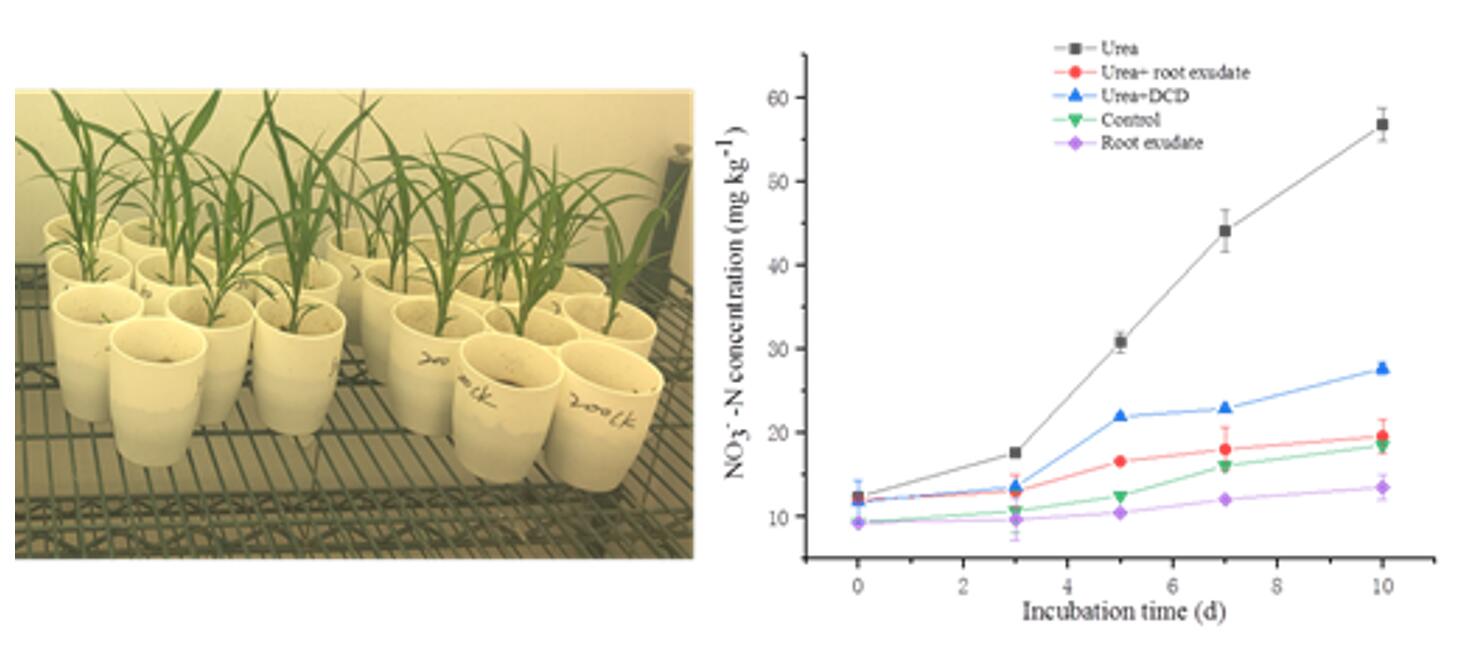
    Sorghum has a great capacity to release biological nitrification inhibitors (BNIs), but the inhibitory effect on nitrification and ammonia oxidizer populations under planted soil conditions is unclear. A pot experiment with three nitrogen (N) application rates (0, 50, and 200 mg N kg-1) was set up to detect the influence of sorghum growth on soil nitrification and investigate the function of blocking the activity of ammonia oxidizers. A 15N-labelled experiment was also conducted to detect the N form absorbed by sorghum. Sorghum root exudates were collected at 30 days after transplanting to hydroponic culture and added into cultured soil to determine the shifts in the populations of nitrifiers. The 15N labeling experiment showed the uptake rate by sorghum of ammonium N fertilizer was 24% and that of nitrate N fertilizer was 9%, indicating that sorghum was an ammonium using plant. Compared with unplanted soil, sorghum planting had a significant inhibitory effect on the nitrification process even at the high N fertilizer rates. Autotrophic nitrification was the prevailing process and sorghum root exudation inhibited this process as much as dicyandiamide (DCD, 10 mg kg-1). Root exudates had a significant inhibitory effect on ammonia oxidizing bacteria (AOB) but had no effect on ammonia oxidizing archaea (AOA).
    Key words:Biological nitrification inhibitors (BNIs); Sorghum; Nitrification; Nitrifiers

    Volume:57

    Page:399-407

    Journal:BIOLOGY AND FERTILITY OF SOILS

    https://doi.org/10.1007/s00374-020-01538-w

    About Us

    • Brief Introduction
    • Address from the Director
    • Directors
    • Organization
    • IUE in Media

    Scientists

    • Academicians
    • Professors
    • Associate Professors

    Research

    • Research Divisions
    • Research Progress

    Education

    • Admission
    • Study at IUE
    • Scholarships

    INT'L Cooperation

    • INT'L Cooperation News
    • Partnership

    Papers

    Join Us

    • Job Opportunities
    • PIFI
    Copyright © Institute of Urban Environment,Chinese Academy of Sciences. All Rights Reserved.
    1799 Jimei Road, Xiamen 361021 China.+86-592-6190973.