


• Home
  • About Us
    • Brief Introduction
    • Address from the Director
    • Directors
    • Organization
    • IUE in Media
  • Scientists
    • Academicians
    • Professors
    • Associate Professors
  • Research
    • Research Divisions
    • Research Progress
  • Education
    • Admission
    • Study at IUE
    • Scholarships
  • INT'L Cooperation
    • INT'L Cooperation News
    • Partnership
  • Papers
  • Join Us
    • Job Opportunities
    • PIFI
      • What's PIFI
Contact Us   |   Sitemap   |   CAS   |   中文
  • Home
  • About Us
    • Brief Introduction
    • Address from the Director
    • Directors
    • Organization
    • IUE in Media
  • Scientists
    • Academicians
    • Professors
    • Associate Professors
  • Research
    • Research Divisions
    • Research Progress
  • Education
    • Admission
    • Study at IUE
    • Scholarships
  • INT'L Cooperation
    • INT'L Cooperation News
    • Partnership
  • Papers
  • Join Us
    • Job Opportunities
    • PIFI

Papers

  • HomePapers
  • Papers
    Decomposition of Water Footprint of Food Consumption in Typical East Chinese Cities
    Huang, RG (Huang, Ruogu); Li, XY (Li, Xiangyang); Liu, Y (Liu, Yang); Tang, YH (Tang, Yaohao); Lin, JY* (Lin, Jianyi)

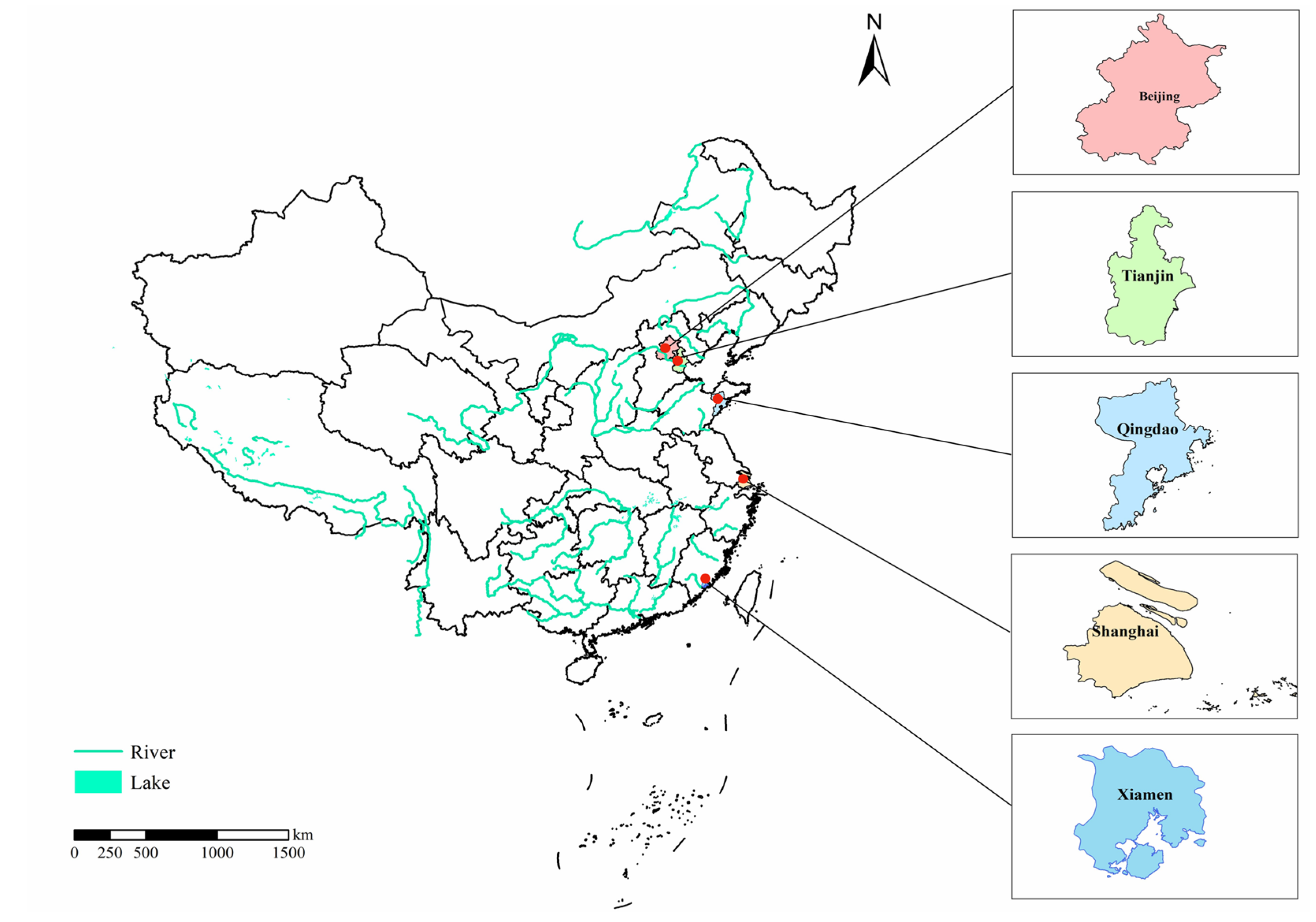
    Water scarcity has put pressure on city development in China. With a particular focus on urban and rural effects, logarithmic mean Divisia index decomposition (LMDI) was used to analyze the water footprint per capita (WFP) of food consumption in five East China cities (Beijing, Tianjin, Shanghai, Qingdao, and Xiamen) from 2008 to 2018. Results show that the WFP of food consumption exhibited an upward tendency among all cities during the research period. Food consumption structure contributed the most to the WFP growth, mainly due to urban and rural residents’ diet shift toward a livestock-rich style. Except in Beijing, the food consumption level mainly inhibited the WFP growth due to the decrease in food consumption level per capita in urban areas. Urbanization had less influence on WFP growth for two megacities (Beijing and Shanghai) due to the strictly controlled urban population inflow policy and more positive effects for other cities. The water footprint intensity effect among cities was mainly due to uneven water-saving efficiency. Meanwhile, Beijing and Tianjin have achieved advancement in water utilization efficiency.
    Key words:water footprint per capita; food consumption; east China cities; LMDI

    Volume:13

    Page:409

    Journal:SUSTAINABILITY

    https://doi.org/10.3390/su13010409

    About Us

    • Brief Introduction
    • Address from the Director
    • Directors
    • Organization
    • IUE in Media

    Scientists

    • Academicians
    • Professors
    • Associate Professors

    Research

    • Research Divisions
    • Research Progress

    Education

    • Admission
    • Study at IUE
    • Scholarships

    INT'L Cooperation

    • INT'L Cooperation News
    • Partnership

    Papers

    Join Us

    • Job Opportunities
    • PIFI
    Copyright © Institute of Urban Environment,Chinese Academy of Sciences. All Rights Reserved.
    1799 Jimei Road, Xiamen 361021 China.+86-592-6190973.