


• Home
  • About Us
    • Brief Introduction
    • Address from the Director
    • Directors
    • Organization
    • IUE in Media
  • Scientists
    • Academicians
    • Professors
    • Associate Professors
  • Research
    • Research Divisions
    • Research Progress
  • Education
    • Admission
    • Study at IUE
    • Scholarships
  • INT'L Cooperation
    • INT'L Cooperation News
    • Partnership
  • Papers
  • Join Us
    • Job Opportunities
    • PIFI
      • What's PIFI
Contact Us   |   Sitemap   |   CAS   |   中文
  • Home
  • About Us
    • Brief Introduction
    • Address from the Director
    • Directors
    • Organization
    • IUE in Media
  • Scientists
    • Academicians
    • Professors
    • Associate Professors
  • Research
    • Research Divisions
    • Research Progress
  • Education
    • Admission
    • Study at IUE
    • Scholarships
  • INT'L Cooperation
    • INT'L Cooperation News
    • Partnership
  • Papers
  • Join Us
    • Job Opportunities
    • PIFI

Papers

  • HomePapers
  • Papers
    The impacts of different high-throughput profiling approaches on the understanding of bacterial antibiotic resistance genes in a freshwater reservoir
    Liu, X (Liu, Xuan); Xiao, P (Xiao, Peng); Guo, YY (Guo, Yunyan); Liu, LM (Liu, Lemian); Yang, J* (Yang, Jun)

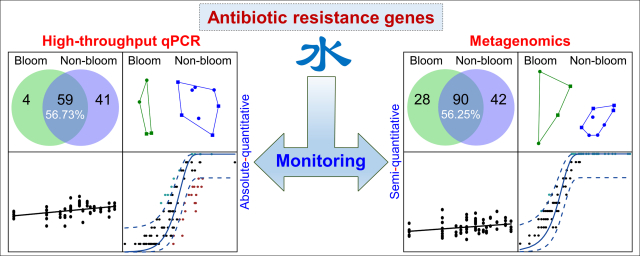
    Bacterial antibiotic resistance genes (ARGs), a kind of emerging environmental pollutants, greatly threat human health through pathogenic bacteria. High-throughput quantitative PCR (HT-qPCR) and metagenomic approaches are two popular tools applied in aquatic environmental ARGs monitoring. However, current poor knowledge of different ARG profiling approaches' impacts on the understanding of the ARGs in aquatic environments greatly limit the further field application of these two approaches. For filling such knowledge gap, this study simultaneously employed these two approaches to examine and compare the ARGs in a freshwater reservoir across space and time. We found metagenomic approach detected more ARG subtypes and much higher bacitracin resistance genes' abundances than HT-qPCR. In general, HT-qPCR and metagenomics analyses both revealed similar ARG dynamic patterns and co-occurrence patterns between ARGs and bacterial taxa as well as the relationships between ARGs and environmental factors. Our results indicated the impacts of different ARG profiling approaches on the understanding of bacterial ARGs might be minor or negligible. HT-qPCR approach has the superiorities of time-saving, absolute quantification, low requirement for bioinformatics skills but also has some drawbacks including higher PCR amplification & primer bias, higher primer dependency and relative lower ARG subtype quantification capability compared to metagenomic approach. We suggest HT-qPCR approach can be employed for routine aquatic environmental monitoring, and metagenomic approach could be applied in comprehensive surveys for getting more ARG subtype information. Our data can be a useful reference for choosing right ARG profiling approaches for bacterial ARGs monitoring and risk assessment in aquatic environments.
    Key words:Antibiotic Resistance Gene; High-throughput Quantitative PCR; Metagenomics; Bacterioplankton; Cyanobacterial Bloom; Aquatic Environment

    Volume:693

    Page:133585

    Journal:SCIENCE OF THE TOTAL ENVIRONMENT

    https://sciencedirect.xilesou.top/science/article/pii/S0048969719335107

    About Us

    • Brief Introduction
    • Address from the Director
    • Directors
    • Organization
    • IUE in Media

    Scientists

    • Academicians
    • Professors
    • Associate Professors

    Research

    • Research Divisions
    • Research Progress

    Education

    • Admission
    • Study at IUE
    • Scholarships

    INT'L Cooperation

    • INT'L Cooperation News
    • Partnership

    Papers

    Join Us

    • Job Opportunities
    • PIFI
    Copyright © Institute of Urban Environment,Chinese Academy of Sciences. All Rights Reserved.
    1799 Jimei Road, Xiamen 361021 China.+86-592-6190973.