


• Home
  • About Us
    • Brief Introduction
    • Address from the Director
    • Directors
    • Organization
    • IUE in Media
  • Scientists
    • Academicians
    • Professors
    • Associate Professors
  • Research
    • Research Divisions
    • Research Progress
  • Education
    • Admission
    • Study at IUE
    • Scholarships
  • INT'L Cooperation
    • INT'L Cooperation News
    • Partnership
  • Papers
  • Join Us
    • Job Opportunities
    • PIFI
      • What's PIFI
Contact Us   |   Sitemap   |   CAS   |   中文
  • Home
  • About Us
    • Brief Introduction
    • Address from the Director
    • Directors
    • Organization
    • IUE in Media
  • Scientists
    • Academicians
    • Professors
    • Associate Professors
  • Research
    • Research Divisions
    • Research Progress
  • Education
    • Admission
    • Study at IUE
    • Scholarships
  • INT'L Cooperation
    • INT'L Cooperation News
    • Partnership
  • Papers
  • Join Us
    • Job Opportunities
    • PIFI

Papers

  • HomePapers
  • Papers
    Gene-environment interactions between GSTs polymorphisms and targeted epigenetic alterations in hepatocellular carcinoma following organochlorine pesticides (OCPs) exposure
    TIAN Mei-Ping*, ZHAO Ben-Hua, Martin Francis- L, Morais Camilo-L-M, LIU Liang-po, HUANG Qing-Yu, ZHANG Jie, SHEN He-Qing*

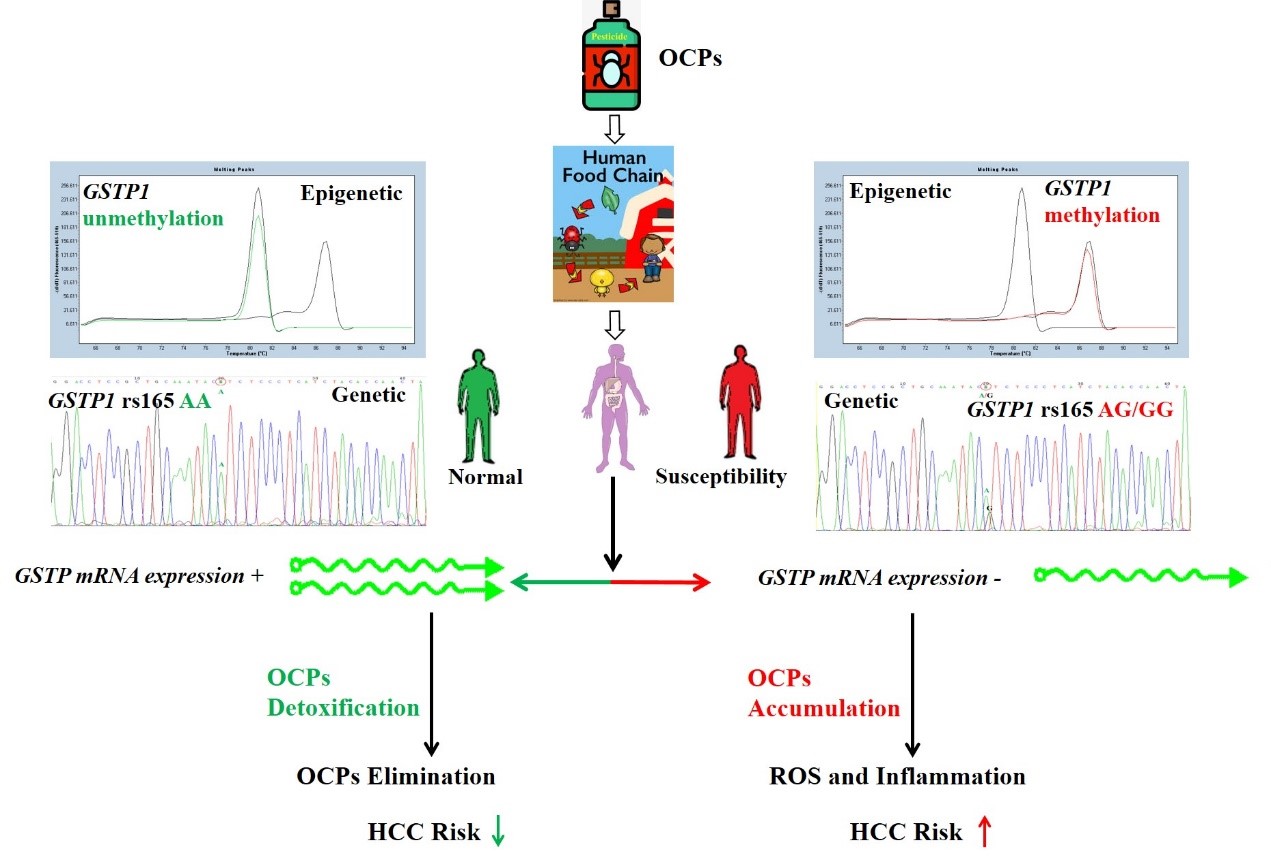
    Exposure to environmental pollutant organochlorine pesticides (OCPs) and the role of tumour suppressor GSTs gene polymorphisms as well as epigenetic alterations have all been well reported in hepatocarcinogenesis. However, the interplay between environmental risk factors and polymorphic tumour suppressor genes or epigenetic factors in hepatocellular carcinoma (HCC) development remains ambiguous. Herein, we investigated the relationship of three GSTs polymorphisms (GSTT1 deletion, GSTM1 deletion, GSTP1 rs1695) as well as GSTP1 promoter region DNA methylation and HCC risk with a particular focus on the interaction with OCPs exposure among 90 HCC cases and 99 controls in a Chinese population. Serum samples were analysed for OCPs exposure employing gas chromatography coupled with mass selective detector (GC-MS). GSTs polymorphisms and epigenetic alterations were determined using high-resolution melting PCR (HRM PCR) and DNA sequencing. After adjusting for confounders (HBV infection, smoking, alcohol consumption, BMI, age, gender), OCPs exposure and GSTP1 methylation is significantly associated with elevated risk of HCC, while no significance is observed for GSTs polymorphisms. Moreover, the effects of OCPs exposure on HCC risk are more pronounced amongst GSTP1 (Ile/Val + Val/Val) and GSTP1 promoter methylation subjects than those who were GSTP1 (Ile/Ile) and unmethylated subjects. The interactions between OCPs exposure and GSTP1 genotype as well as GSTP1 epigenetic status are statistically significant. The current study demonstrates the importance of gene-environment interactions in the multifactorial development of HCC.
    Key words:DNA methylation, Hepatocellular carcinoma, gene polymorphisms, GSTs, organochlorine pesticides

    Volume:134

    Page:105313

    Journal:ENVIRONMENT INTERNATIONAL

    https://doi.org/10.1016/j.envint.2019.105313

    About Us

    • Brief Introduction
    • Address from the Director
    • Directors
    • Organization
    • IUE in Media

    Scientists

    • Academicians
    • Professors
    • Associate Professors

    Research

    • Research Divisions
    • Research Progress

    Education

    • Admission
    • Study at IUE
    • Scholarships

    INT'L Cooperation

    • INT'L Cooperation News
    • Partnership

    Papers

    Join Us

    • Job Opportunities
    • PIFI
    Copyright © Institute of Urban Environment,Chinese Academy of Sciences. All Rights Reserved.
    1799 Jimei Road, Xiamen 361021 China.+86-592-6190973.