


• Home
  • About Us
    • Brief Introduction
    • Address from the Director
    • Directors
    • Organization
    • IUE in Media
  • Scientists
    • Academicians
    • Professors
    • Associate Professors
  • Research
    • Research Divisions
    • Research Progress
  • Education
    • Admission
    • Study at IUE
    • Scholarships
  • INT'L Cooperation
    • INT'L Cooperation News
    • Partnership
  • Papers
  • Join Us
    • Job Opportunities
    • PIFI
      • What's PIFI
Contact Us   |   Sitemap   |   CAS   |   中文
  • Home
  • About Us
    • Brief Introduction
    • Address from the Director
    • Directors
    • Organization
    • IUE in Media
  • Scientists
    • Academicians
    • Professors
    • Associate Professors
  • Research
    • Research Divisions
    • Research Progress
  • Education
    • Admission
    • Study at IUE
    • Scholarships
  • INT'L Cooperation
    • INT'L Cooperation News
    • Partnership
  • Papers
  • Join Us
    • Job Opportunities
    • PIFI

Papers

  • HomePapers
  • Papers
    Preparation of biochar via pyrolysis at laboratory and pilot scales to remove antibiotics and immobilize heavy metals in livestock feces
    Tian, RQ (Tian, Renqiang); Li, CX (Li, Chunxing); Xie, SY (Xie, Shengyu); You, FT (You, Futian); Cao, ZH (Cao, Zhihong); Xu, ZH (Xu, Zhihong); Yu, GW (Yu, Guangwei); Wang, Y* (Wang, Yin)

    Purpose

    Pyrolysis is the most effective method to completely remove antibiotics and immobilize heavy metals from livestock feces. However, the effect of the pyrolysis temperature on antibiotic removal at laboratory and pilot scales is still unclear.

    Materials and methods

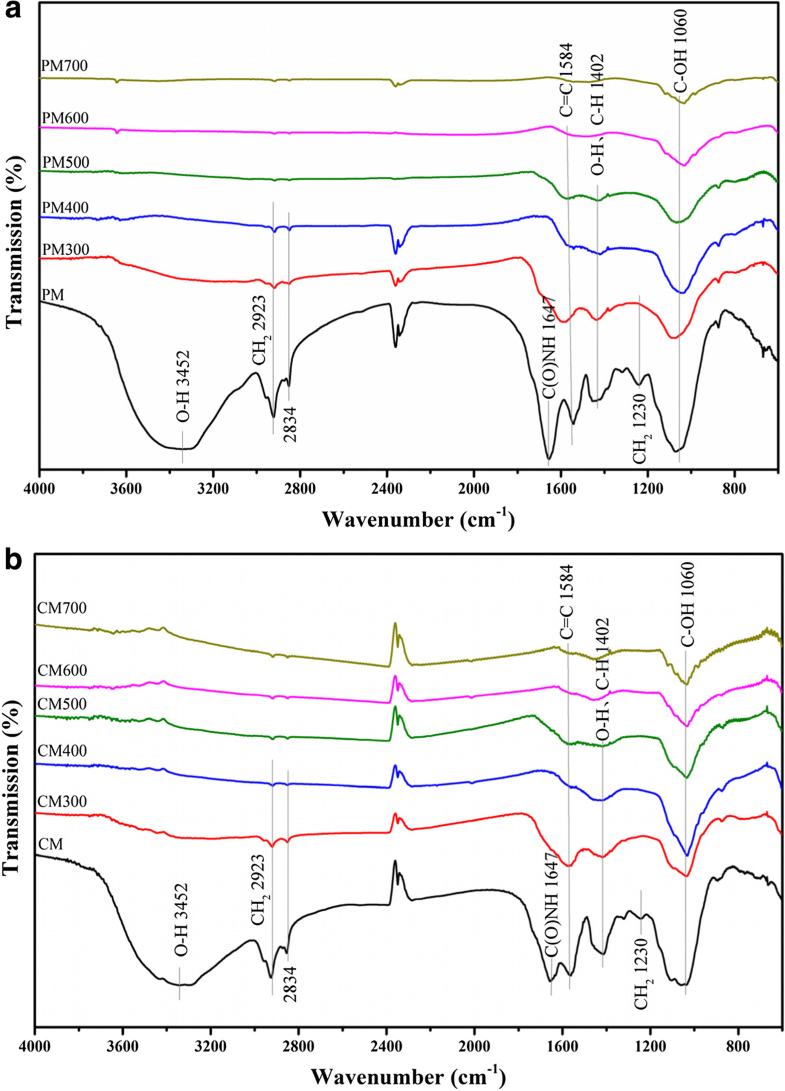
    The pyrolysis technique was used to convert pig manure (PM) and chicken manure (CM) into biochar at different temperatures from 300 to 700 °C in a laboratory-scale test. The performance of antibiotic removal and heavy metal immobilization in livestock feces was studied, and the optimal temperature of 600 °C was selected for the pilot-scale verification.

    Results and discussion

    The results showed that the removal of the antibiotics tylosin (TYL), tetracycline (TC), chlortetracycline (CTC), doxycycline (DOXY), sulfamethazine (SMZ), sulfadiazine (SDZ), and sulfamethoxazole (SMX) was satisfactory, and all seven typical antibiotics were completely removed at 600 °C. In addition, the heavy metals zinc (Zn), copper (Cu), chromium (Cr), lead (Pb), nickel (Ni), cadmium (Cd), and arsenic (As) in the manure were well immobilized, and higher temperatures (above 600 °C) favored their immobilization. The results of heavy metal immobilization and antibiotic removal of the pilot-scale test were similar to those of the laboratory-scale test.

    Conclusions

    Laboratory- and pilot-scale experiments showed that the current study provided a safe method and technology for treating and recycling livestock feces into biochar via the pyrolysis process.
    Key words:Antibiotic removal; Biochar; Heavy metal immobilization; Livestock feces; Pilot-scale; Pyrolysis

    Volume:19

    Page:2891-2902

    Journal:JOURNAL OF SOILS AND SEDIMENTS

    https://link.springer.com/article/10.1007/s11368-019-02350-2

    About Us

    • Brief Introduction
    • Address from the Director
    • Directors
    • Organization
    • IUE in Media

    Scientists

    • Academicians
    • Professors
    • Associate Professors

    Research

    • Research Divisions
    • Research Progress

    Education

    • Admission
    • Study at IUE
    • Scholarships

    INT'L Cooperation

    • INT'L Cooperation News
    • Partnership

    Papers

    Join Us

    • Job Opportunities
    • PIFI
    Copyright © Institute of Urban Environment,Chinese Academy of Sciences. All Rights Reserved.
    1799 Jimei Road, Xiamen 361021 China.+86-592-6190973.