


• Home
  • About Us
    • Brief Introduction
    • Address from the Director
    • Directors
    • Organization
    • IUE in Media
  • Scientists
    • Academicians
    • Professors
    • Associate Professors
  • Research
    • Research Divisions
    • Research Progress
  • Education
    • Admission
    • Study at IUE
    • Scholarships
  • INT'L Cooperation
    • INT'L Cooperation News
    • Partnership
  • Papers
  • Join Us
    • Job Opportunities
    • PIFI
      • What's PIFI
Contact Us   |   Sitemap   |   CAS   |   中文
  • Home
  • About Us
    • Brief Introduction
    • Address from the Director
    • Directors
    • Organization
    • IUE in Media
  • Scientists
    • Academicians
    • Professors
    • Associate Professors
  • Research
    • Research Divisions
    • Research Progress
  • Education
    • Admission
    • Study at IUE
    • Scholarships
  • INT'L Cooperation
    • INT'L Cooperation News
    • Partnership
  • Papers
  • Join Us
    • Job Opportunities
    • PIFI

Papers

  • HomePapers
  • Papers
    Mobile Incubator for Iron(III) Reduction in the Gut of the Soil-Feeding Earthworm Pheretima guillelmi and Interaction with Denitrification
    Zhou Guo-Wei, Xiao-Ru Yang*, An-Qi Sun, Hu Li, Simon Bo Lassen, Bang-Xiao Zheng, and Yong-Guan Zhu

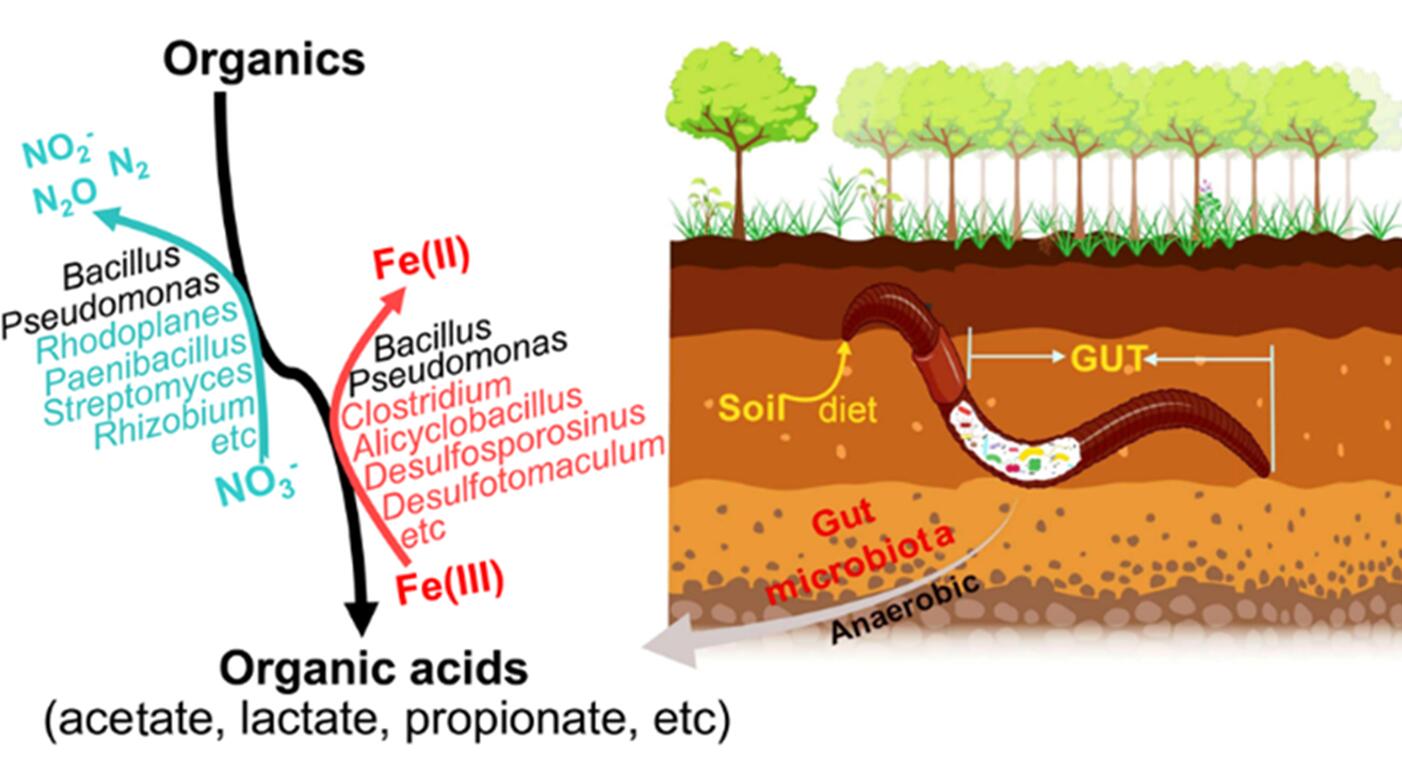
    Diets of soil-feeding earthworms contain abundant nitrate and iron(III) oxides, which are potential electron acceptors for mineralization of organic compounds. The earthworm gut provides an ideal habitat for ingested iron(III)-reducing microorganisms. However, little is known about iron(III) reduction and its interaction with other processes in the guts of earthworms. Here, we determined the dynamics of iron(III) and revealed its interaction with the turnover of organic acids and nitrate in the gut of the earthworm Pheretima guillelmi. Samples from gut contents combined with anoxic incubation were used for chemical analysis and 16S rRNA based Illumina sequencing. Chemical analysis showed that higher ratios of iron(II)/iron(III), nitrite/nitrate, and more abundant organic acids were contained in the in vivo gut of the earthworm P. guillelmi than those in the in situ soil. A higher rate of iron(III) reduction was detected in treatments of microcosmic incubation with gut contents (IG gut) than that with soil (IG soil), and nitrate reduction occurred earlier than iron(III) reduction in both treatments. Potential iron(III) reducers were dominated by fermentative genera Clostridium, Bacillus, and Desulfotomaculum in the treatment of IG gut, while they were dominated by dissimilatory iron(III)-reducing genera Geobacter in the treatment of IG soil. The iron(III)-reducing microbial community shared several genera with denitrifers in the treatment of IG gut, revealing a close link between iron(III) reduction and denitrification in the gut of earthworms. Collectively, our findings demonstrated that iron(III) reduction occurred along the gut and provided novel insights into the great contribution of earthworm gut microbiota on Fe and the associated C and N cycling in soil environments.
    Key words:

    Volume:

    Page:

    Journal:ENVIRONMENTAL SCIENCE & TECHNOLOGY

    https://pubs.acs.org/doi/10.1021/acs.est.8b06187

    About Us

    • Brief Introduction
    • Address from the Director
    • Directors
    • Organization
    • IUE in Media

    Scientists

    • Academicians
    • Professors
    • Associate Professors

    Research

    • Research Divisions
    • Research Progress

    Education

    • Admission
    • Study at IUE
    • Scholarships

    INT'L Cooperation

    • INT'L Cooperation News
    • Partnership

    Papers

    Join Us

    • Job Opportunities
    • PIFI
    Copyright © Institute of Urban Environment,Chinese Academy of Sciences. All Rights Reserved.
    1799 Jimei Road, Xiamen 361021 China.+86-592-6190973.