


• Home
  • About Us
    • Brief Introduction
    • Address from the Director
    • Directors
    • Organization
    • IUE in Media
  • Scientists
    • Academicians
    • Professors
    • Associate Professors
  • Research
    • Research Divisions
    • Research Progress
  • Education
    • Admission
    • Study at IUE
    • Scholarships
  • INT'L Cooperation
    • INT'L Cooperation News
    • Partnership
  • Papers
  • Join Us
    • Job Opportunities
    • PIFI
      • What's PIFI
Contact Us   |   Sitemap   |   CAS   |   中文
  • Home
  • About Us
    • Brief Introduction
    • Address from the Director
    • Directors
    • Organization
    • IUE in Media
  • Scientists
    • Academicians
    • Professors
    • Associate Professors
  • Research
    • Research Divisions
    • Research Progress
  • Education
    • Admission
    • Study at IUE
    • Scholarships
  • INT'L Cooperation
    • INT'L Cooperation News
    • Partnership
  • Papers
  • Join Us
    • Job Opportunities
    • PIFI

Papers

  • HomePapers
  • Papers
    Simulation of Urban Water Resources in Xiamen Based on a WEAP Model
    Kou, LM (Kou, Limin); Li, XY (Li, Xiangyang); Lin, JY* (Lin, Jianyi); Kang, JF (Kang, Jiefeng)

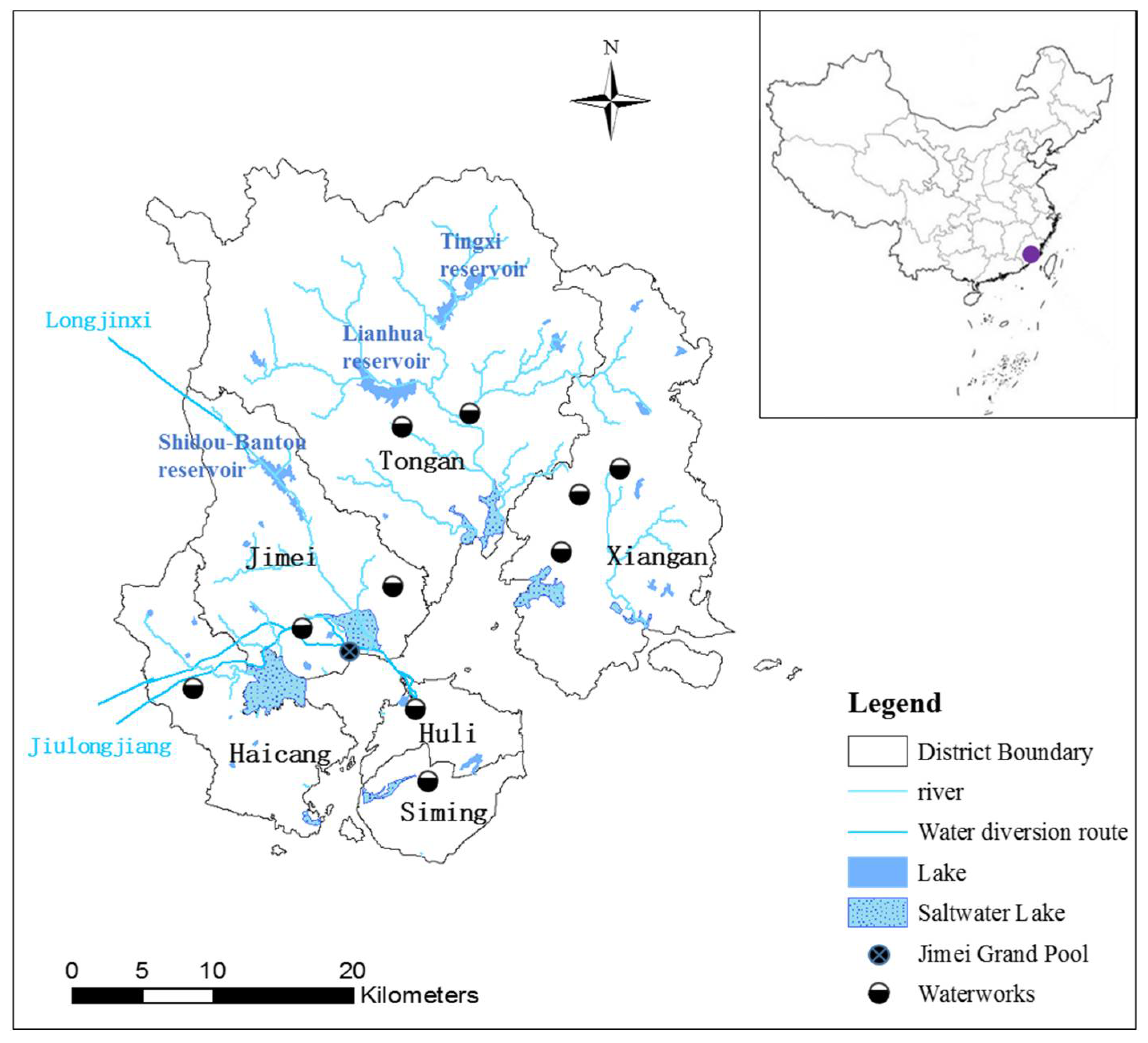
    A water evaluation and planning model (WEAP) for Xiamen City was used to analyze trends in water use and demand between 2015 and 2050. This study was unique in that it considered the water resources of each of the city’s five districts’ separately, rather than the city as a whole. The water saving potential, water shortages, and water supply alternatives were analyzed under different simulated scenarios. The results show that future water consumption will greatly increase in Xiamen City, and that there will be a water shortage after 2030 without new water supplies. Water shortages will first occur in the Tongan and Xiangan districts, due to established water supply priorities and capacity. Industry restructuring (structural water-saving scenario, SWS) and advanced water-saving technology (technical water-saving scenario, TWS) can result in water saving potentials of 6.97% and 9.82% by 2050, respectively, while adopting both strategies (double water-saving scenario, DWS) can save 16.44%. The prevention of future water shortages requires the implementation of water-saving measures and the use of new water supplies.
    Key words:urban water resources; saving potentials; spatial allocation; WEAP model

    Volume:10

    Page:732

    Journal:WATER

    About Us

    • Brief Introduction
    • Address from the Director
    • Directors
    • Organization
    • IUE in Media

    Scientists

    • Academicians
    • Professors
    • Associate Professors

    Research

    • Research Divisions
    • Research Progress

    Education

    • Admission
    • Study at IUE
    • Scholarships

    INT'L Cooperation

    • INT'L Cooperation News
    • Partnership

    Papers

    Join Us

    • Job Opportunities
    • PIFI
    Copyright © Institute of Urban Environment,Chinese Academy of Sciences. All Rights Reserved.
    1799 Jimei Road, Xiamen 361021 China.+86-592-6190973.